
Scuola Grande di San Rocco
Tintoretto's confraternity · 16th c.
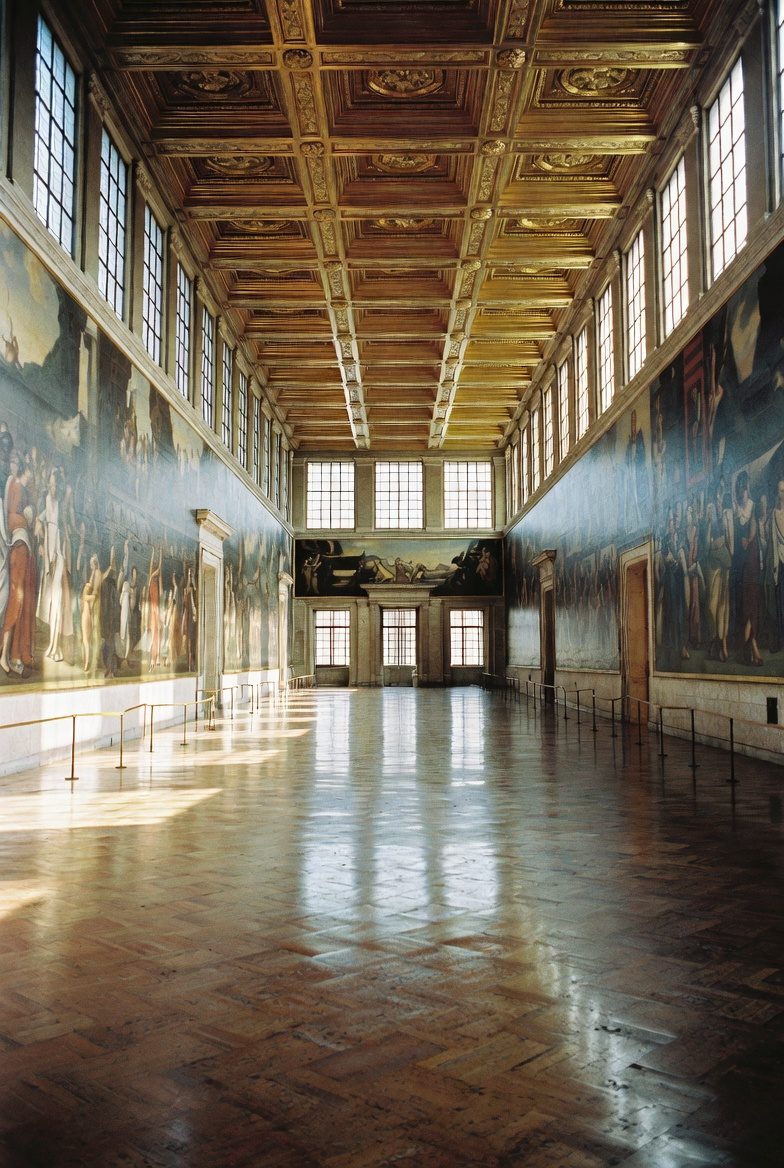
A confraternity hall with sixty paintings by Tintoretto on its walls and ceilings — the longest single commission given to any Venetian painter, and his life's work.
History
Founded in 1478 as a scuola dei battuti — one of the lay brotherhoods that handled charity, mutual aid and burial in late-medieval Venice — the Scuola was placed under the patronage of San Rocco, the plague saint. The building itself was begun in 1517 and finished, after several stops and restarts, in 1560: a Lombardesque ground floor with Bartolomeo Bon's elder hand on the lower windows, an upper floor by Antonio Scarpagnino, and a Sala dell'Albergo built specifically to receive a single masterpiece.
In 1564 the Scuola ran a competition for the ceiling of that small upper room. Veronese, Salviati, Zuccari and Schiavone submitted preparatory drawings on the assumption that the brotherhood would compare and choose. Tintoretto skipped the sketch stage entirely, painted the finished picture overnight, had it nailed in place above the panel they were judging, and donated it on the spot — winning the contract the others were still working up.
He spent the next twenty-three years filling the building. The Sala dell'Albergo cycle was painted between 1564 and 1567; the upper hall between 1575 and 1581; the lower hall between 1582 and 1587. Sixty-odd canvases, all in oil on canvas rather than fresco, attached to the walls and ceilings in their original frames. The lower hall is the cycle of the Virgin's life; the upper hall is the Old and New Testaments; the small room next to it holds the Crucifixion of 1565, twelve metres wide, that Henry James called the greatest painting in the world.
The Scuola survived the dissolution of the religious orders in 1806 because it was officially a charity, not a church — the only one of the six Scuole Grandi to keep its building, paintings and confraternal life unbroken. Pope Pius VI had elevated it to arciconfraternita in 1789, a status the brotherhood still holds. The paintings are still on the walls Tintoretto hung them on, in a building Tintoretto worked in.
Use the mirrors. The brotherhood placed angled hand-mirrors in the upper hall so visitors could study the ceilings without breaking their necks. They still work.
Highlights
Crocifissione
The 1565 Crucifixion in the Sala dell'Albergo — the painting Ruskin came specifically to see.
Upper hall ceiling
Twenty-one Old Testament scenes; use the mirrors and don't try to do it standing up.
Lower hall
The Marian cycle, painted last, more relaxed, with the famous Flight into Egypt in dusk light.
Visit
- Address
- San Polo 3052, 30125 Venezia
- Hours
- 9:30 – 17:30 daily
- Notes
- Closed 25 December and 1 January.
- Getting there
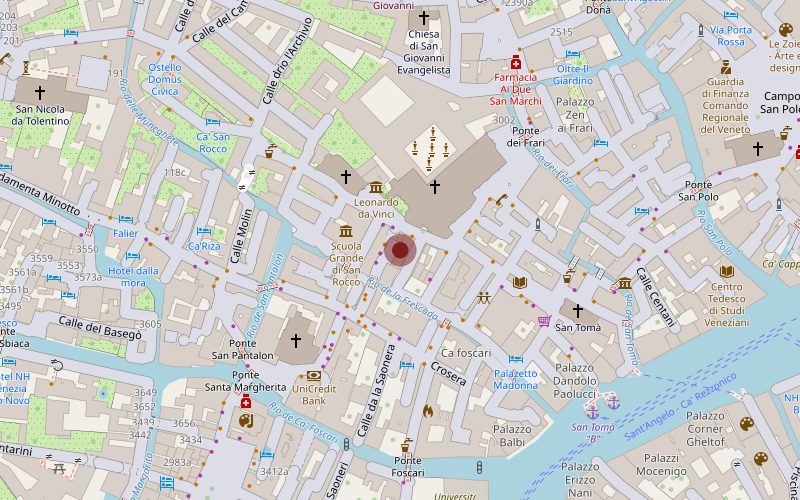
- Vaporetto line 1 to San Tomà; the Scuola sits a block beyond the Frari on the same campo.
© OpenStreetMap contributors
See also
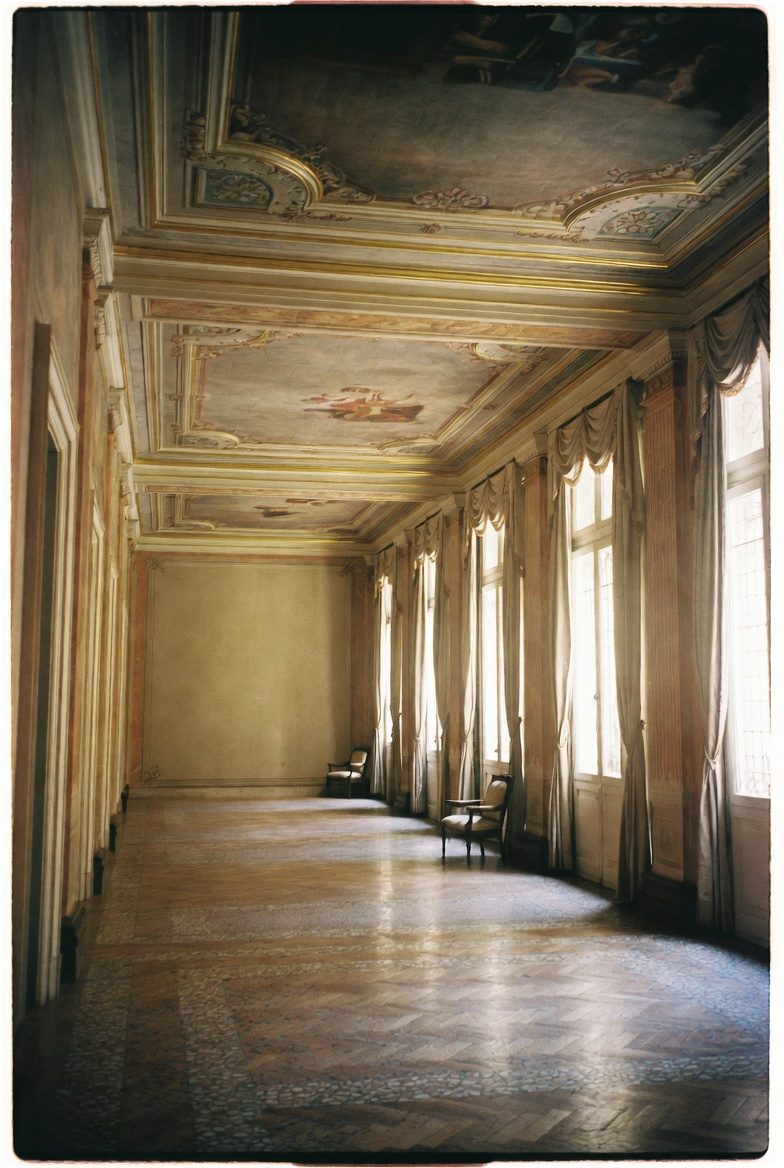
Palazzo Mocenigo
A patrician house museum in Santa Croce — costume, lace, perfume bottles, and the rooms of a family that gave the Republ…
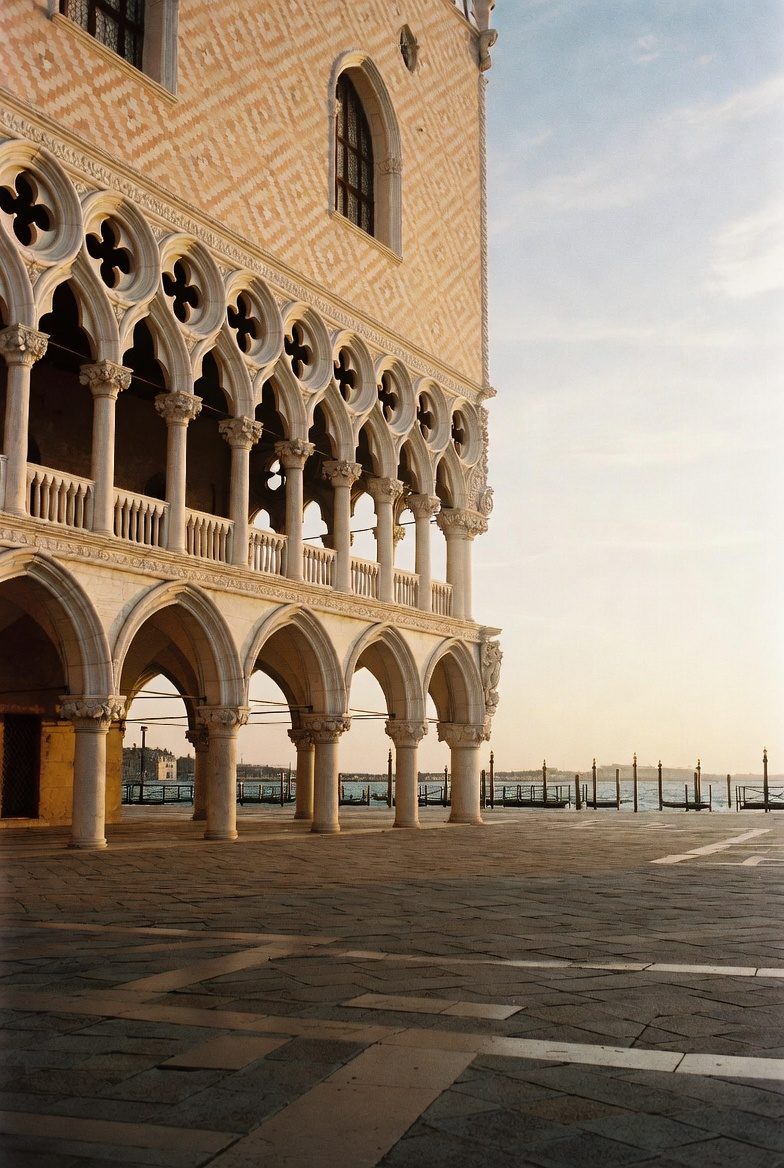
Palazzo Ducale
For nearly a thousand years this was the political centre of the Republic — the doge's residence, the supreme court, the…
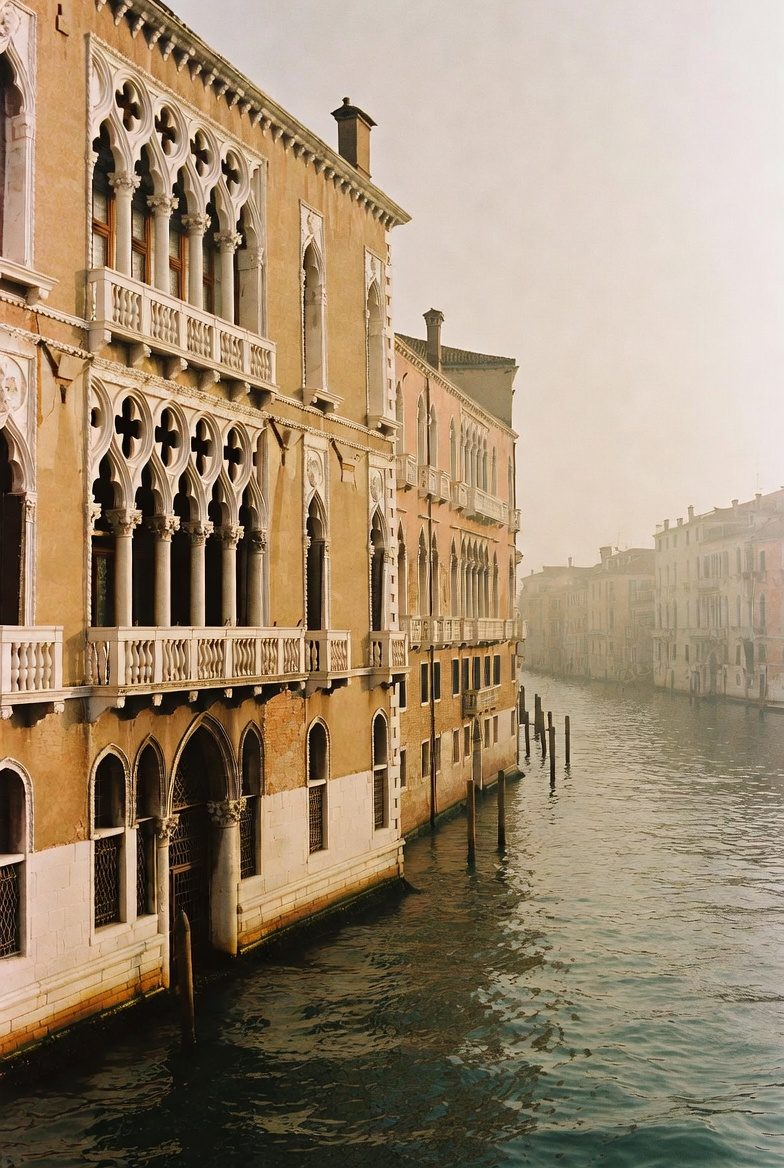
Ca' d'Oro
The most beautiful Gothic façade on the Grand Canal — once gilded leaf by leaf, hence the name, and now the home of a sm…