
Palazzo Ducale
Doge's Palace · 14th–15th c.
For nearly a thousand years this was the political centre of the Republic — the doge's residence, the supreme court, the prison and, in the upper rooms, the largest oil painting in the world.
History
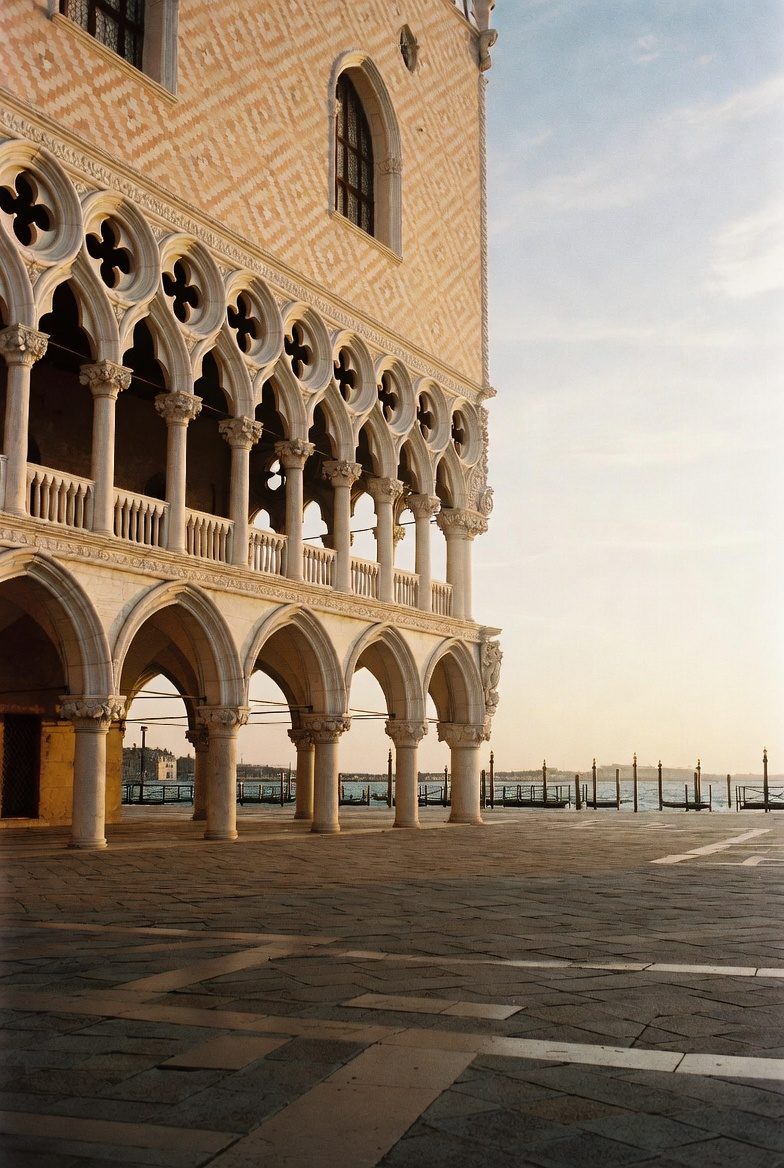
The first palace on this site went up in the ninth century, when Doge Angelo Partecipazio shifted the seat of government from Malamocco to the higher ground around the Rialto in 810. What stands now is the long Gothic façade begun in 1340, with its arcaded loggia and lozenged pink-and-white marble — a building that, almost uniquely in European architecture, places its weight at the top.
Twelfth-century Doge Sebastiano Ziani had already given the palace its civic plan: one wing facing the Piazzetta for the courts, the other facing the basin of San Marco for the offices of state. The eastern wing went up between 1424 and 1442 under Doges Tommaso Mocenigo and Francesco Foscari; the Porta della Carta, the ceremonial entry between palace and basilica, was carved by Giovanni and Bartolomeo Bon in the 1440s.
Inside is the long story of Venetian government: the Sala del Maggior Consiglio, where two thousand patricians once sat in session under Tintoretto's Paradiso; the Sala dello Scrutinio with its frescoed naval battles; the cramped piombi attic prisons from which Casanova famously escaped in 1756. Two devastating fires in 1574 and 1577 gutted much of the interior — the rebuild kept the medieval shell but called in Veronese, Tintoretto and Palma il Giovane to redecorate the council halls.
The Bridge of Sighs, slipped behind the palace in 1614, took the convicted across to the new prisons on the far bank — a route few of them came back along. After the fall of the Republic in 1797 the palace lost its political function and was given over to public institutions: the Biblioteca Marciana lived here from 1811 to 1904 before the building reopened as a civic museum.
Stop on the loggia for a moment before you go up: the columns of the lower arcade hide a whole hidden grammar of carved capitals, each one a small lecture on virtue, vice and the months of the year.
Highlights
Sala del Maggior Consiglio
53m long, hung with the largest oil painting in the world — Tintoretto's Paradiso.
Scala d'Oro
The gilded staircase by Sansovino, designed to humble visiting ambassadors before they reached the doge.
Itinerari Segreti
Bookable side tour through the inquisitor's offices, torture chamber and lead-roof prisons.
Visit
- Address
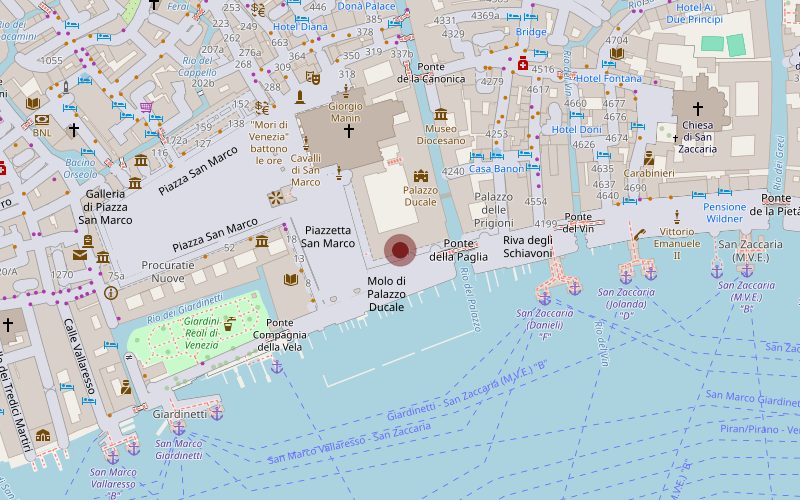
- Piazza San Marco 1, 30124 Venezia
- Hours
- 9:00 – 19:00 (last entry 18:00)
- Notes
- Open daily; closed 25 December and 1 January.
- Getting there
- Vaporetto line 1 or 2 to San Marco — Vallaresso or San Zaccaria.
© OpenStreetMap contributors
See also
Ca' d'Oro
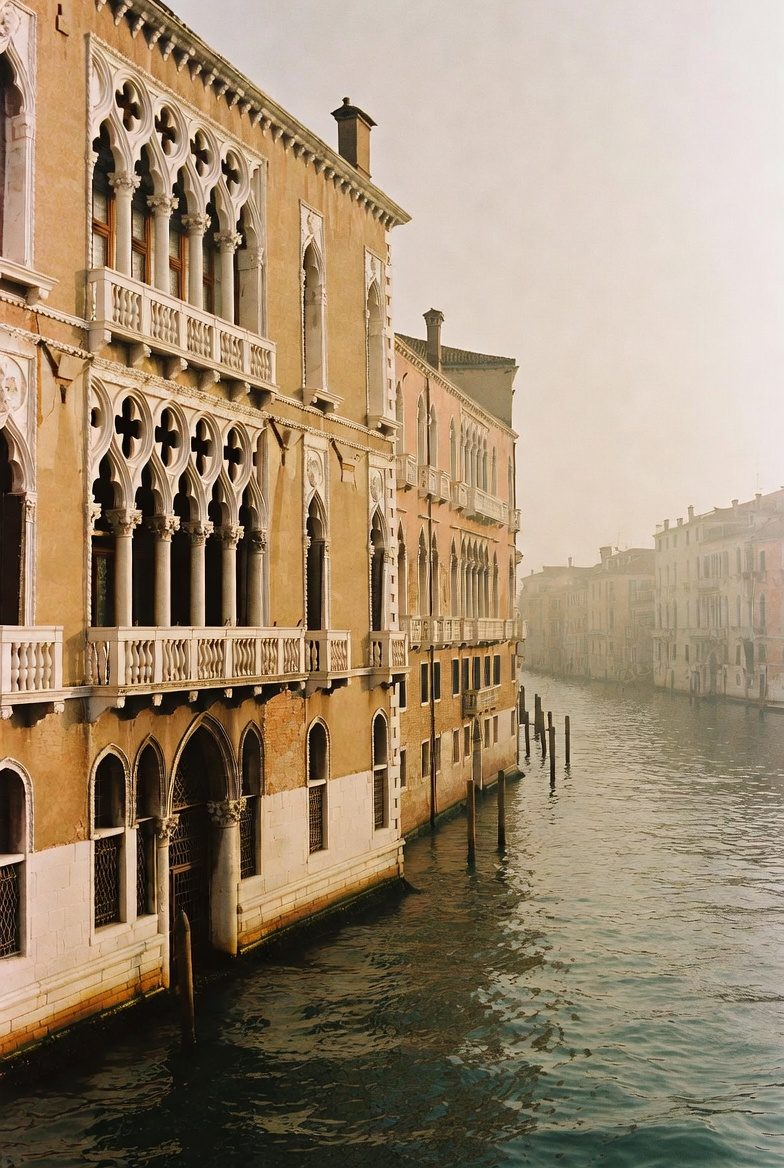
The most beautiful Gothic façade on the Grand Canal — once gilded leaf by leaf, hence the name, and now the home of a sm…
Ca' Rezzonico
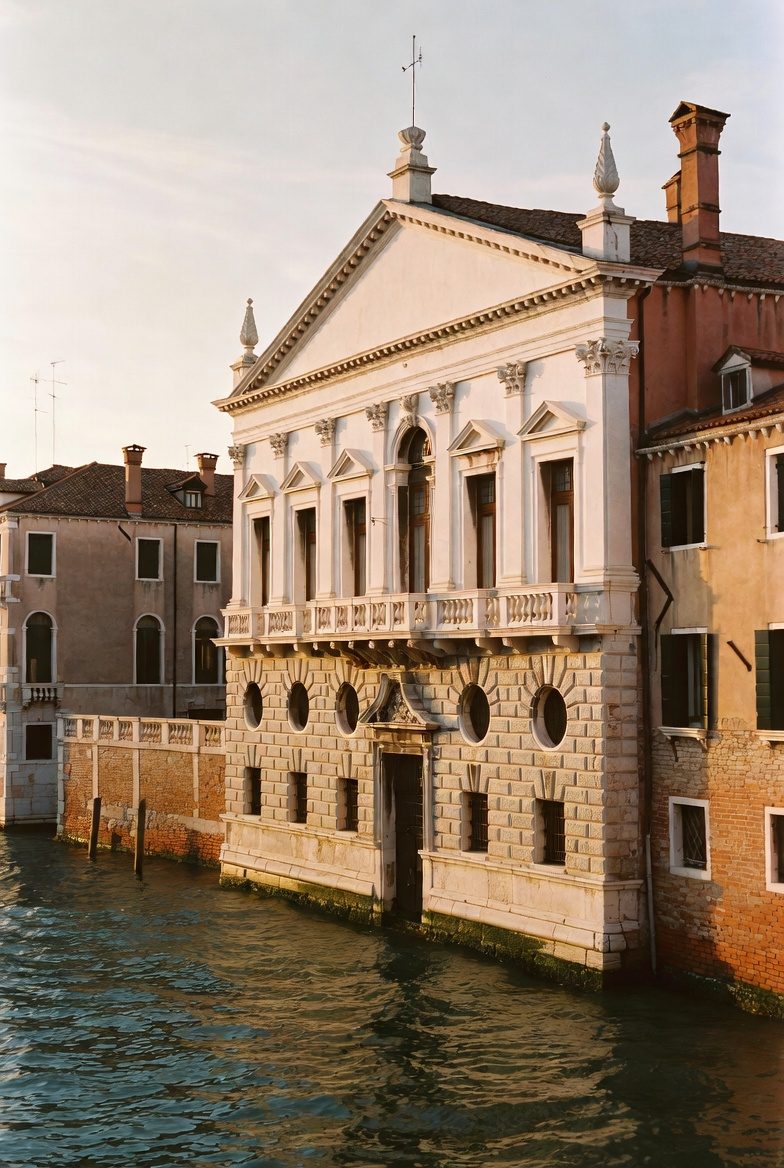
A baroque palazzo by Longhena, finished a century later by Massari, and now a museum whose rooms still feel like a worki…
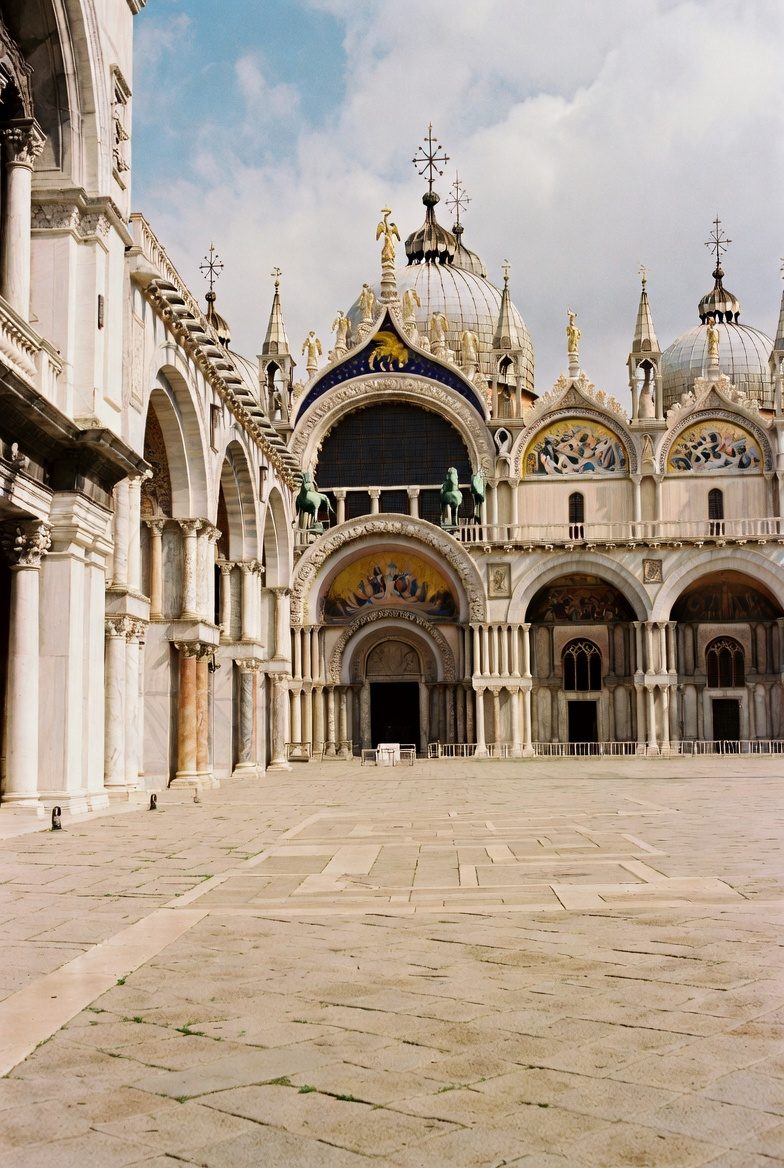
Basilica di San Marco
A Byzantine church grafted onto a Venetian piazza, faced in marble looted from a dozen ports, and roofed inside with eig…