
Burano
Island of the lace-makers · Settled 6th c.
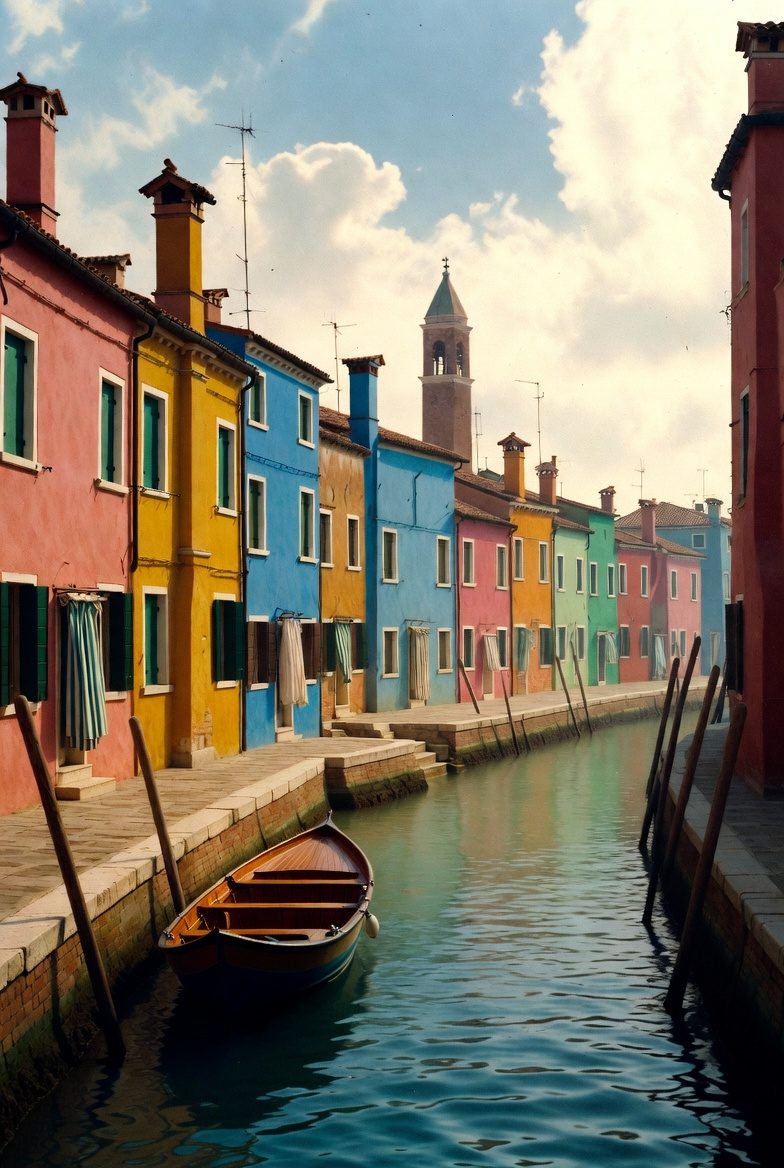
An island of painted houses in the northern lagoon — Venice's lace-making town, kept brightly colored so its fishermen could see it through the morning fog.
History
Burano was settled in the 6th century by mainlanders from Altinum fleeing successive waves of Lombard incursion — the same diaspora that founded Torcello, half a kilometre across the water, and ultimately the Rialto. The island is in fact four small islets stitched together by bridges over three canals, and was a satellite of Torcello until that older settlement silted up and emptied out in the late Middle Ages. The leaning brick campanile of San Martino, four metres out of true, is a reminder that the lagoon mud beneath these islands is still very much in motion.
For most of its history Burano was a fishing community — and from the 16th century onwards, the centre of Venetian lace, a craft the Republic tried hard to monopolise as it had monopolised glass and printing. Burano punto in aria ("stitch in air") was so prized that in 1481 Leonardo da Vinci is said to have travelled to Venetian-held Cyprus to buy a length for the high altar of Milan Cathedral; in the 17th century French agents under Colbert smuggled out lacemakers in an attempt to start a rival industry at Alençon.
The famous painted houses are not a tourist invention. Each fisherman owned and painted his own; the colour was a property mark, and a way of finding the right canal-side door from a boat in the fog. The custom is now codified — anyone wanting to repaint applies to the comune, which assigns a specific colour from a registered palette so the patchwork stays balanced.
The lace tradition almost died out by 1900, when industrial machine lace put the island out of business. The Lace School (Scuola dei Merletti), reopened in 1872 by Countess Andriana Marcello, kept the technique alive long enough to document it; the school closed in 1972 but the small Museo del Merletto on the main square keeps the tradition catalogued, and a handful of working lacemakers still demonstrate punto in aria there most afternoons.
Come on the first vaporetto of the morning, before the cruise traffic, and walk the back canals — Burano is a small island and most visitors never leave the main streets.
Highlights
Museo del Merletto
Small lace museum in the Palazzo del Podestà; demonstrations by the surviving school masters most afternoons.
The leaning campanile
San Martino's bell tower leans almost two metres out of true — the lagoon mud is doing what it does.
Mazzorbo bridge
Walk over the wooden footbridge to the smaller island of Mazzorbo for vineyards, a Roman pier and the best meal on the island.
Visit
- Address
- Isola di Burano, Laguna Nord
- Hours
- Open island. Lace Museum: 10:00 – 17:00 Tue–Sun.
- Notes
- Lace Museum closed Mondays.
- Getting there
- Vaporetto line 12 from Fondamente Nove (Cannaregio). 45 minutes via Murano and Mazzorbo.
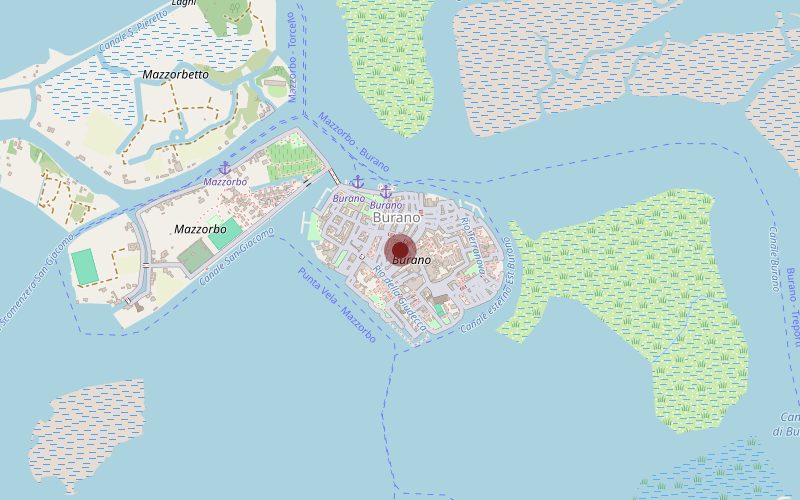
© OpenStreetMap contributors
See also
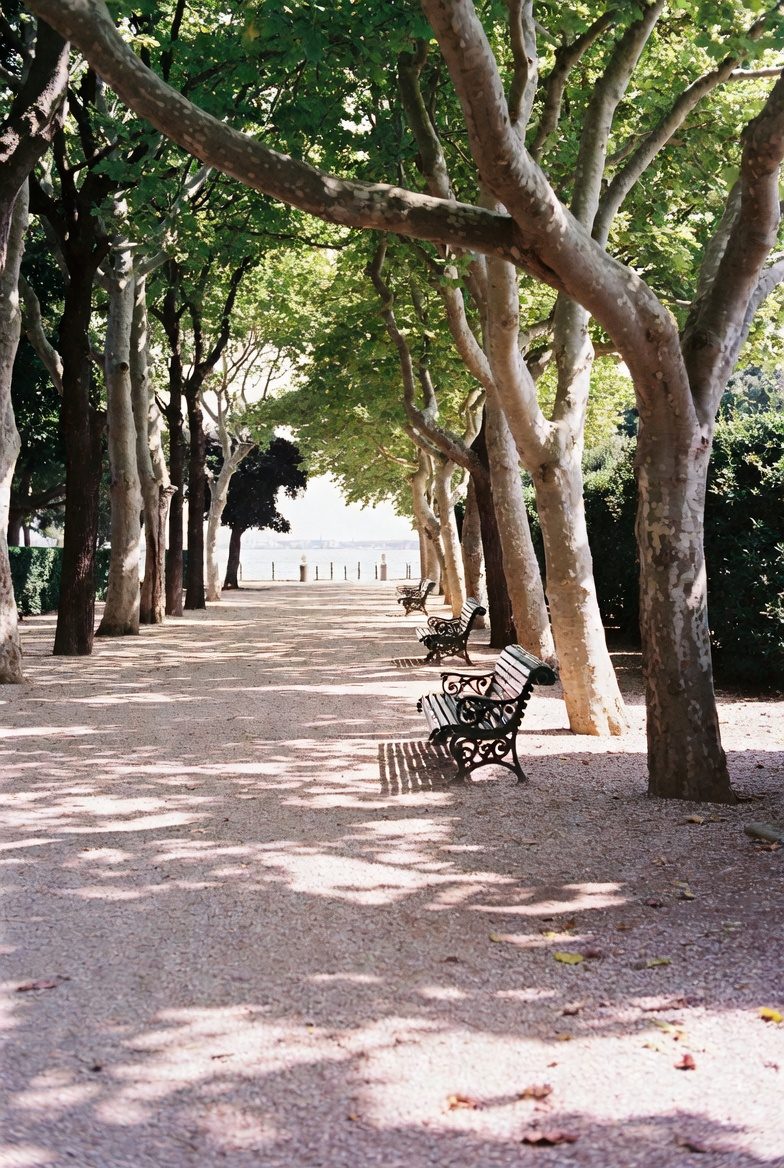
Giardini della Biennale
The only sizeable public park in central Venice — laid out on Napoleonic landfill in 1807 and now scattered with the nat…
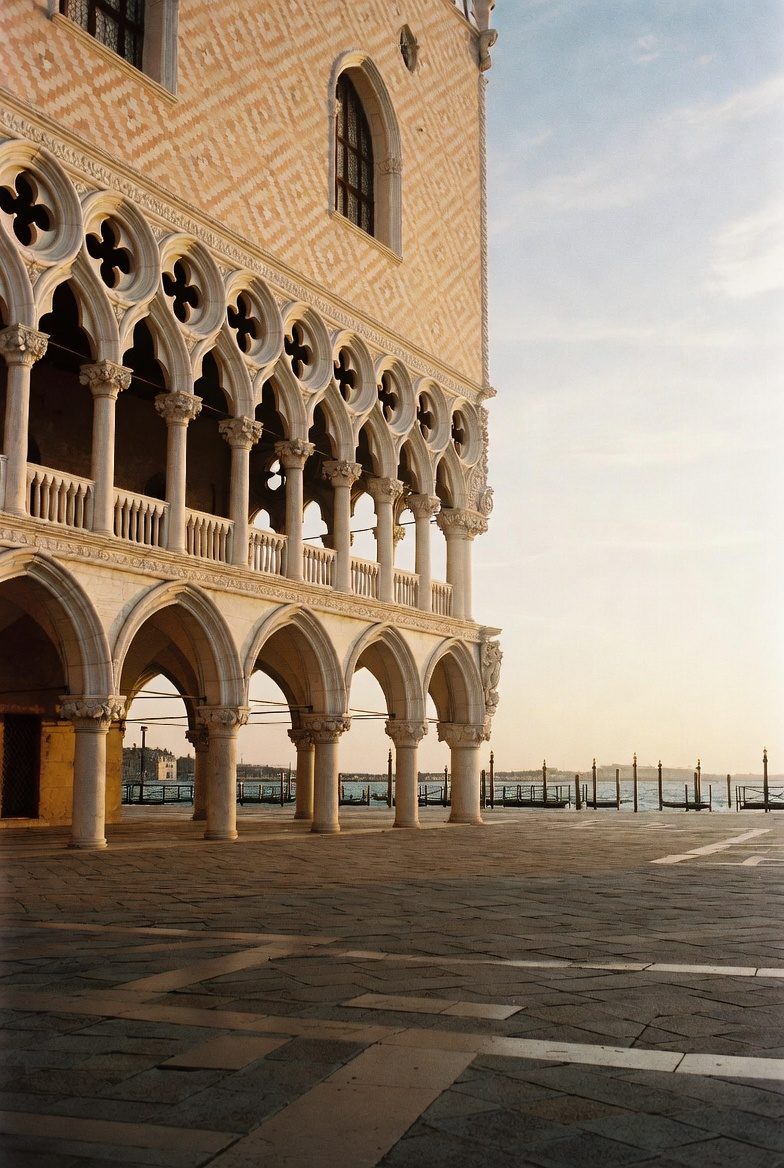
Palazzo Ducale
For nearly a thousand years this was the political centre of the Republic — the doge's residence, the supreme court, the…
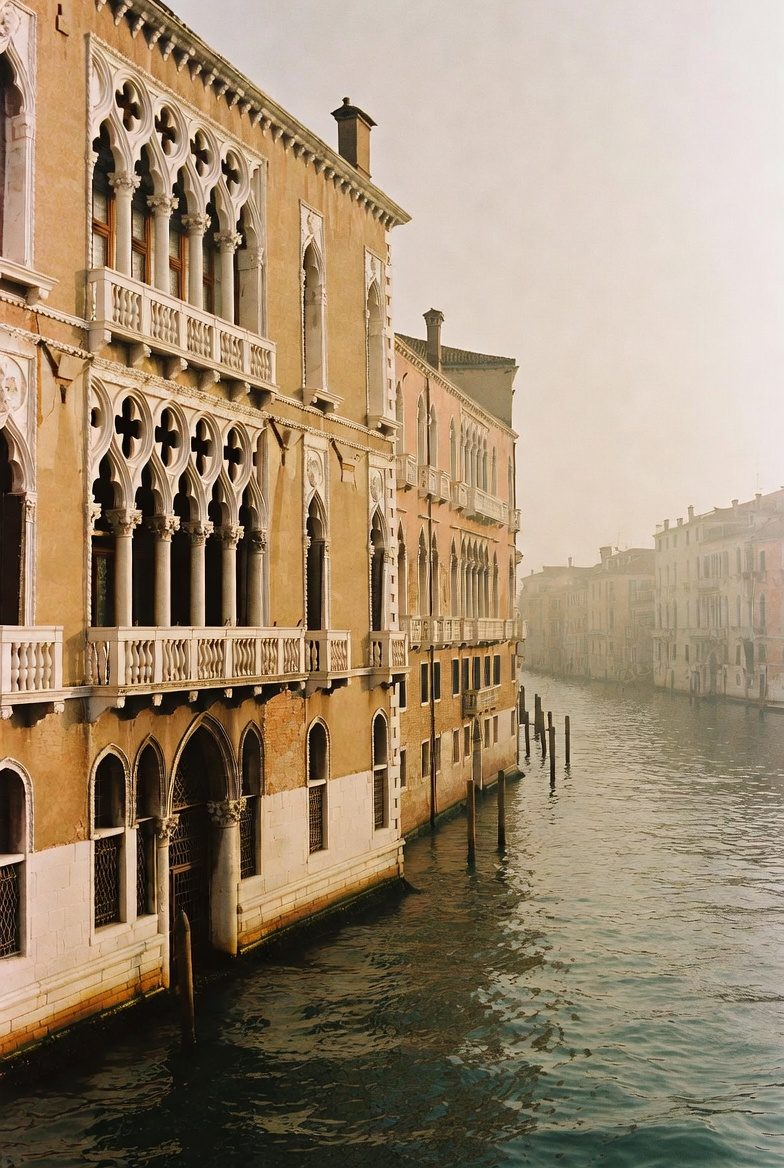
Ca' d'Oro
The most beautiful Gothic façade on the Grand Canal — once gilded leaf by leaf, hence the name, and now the home of a sm…